







IExactly 60 years ago, on July 16, 1965, the Presidents of the French Republic and the Italian Republic, Charles de Gaulle and Giuseppe Saragat, inaugurated the Mont Blanc Tunnel. At the time, it was the longest tunnel in the world.
Today, the teams of the Mont Blanc Tunnel GEIE, Autoroutes et Tunnel du Mont Blanc, and the Italian Company of the Mont Blanc Tunnel pay tribute to the pioneers who opened a path beneath the highest peak in Europe, uniting two friendly valleys. The Tunnel remains a vital axis of tourism, economic, social, and cultural communication, serving two local valleys between Chamonix and Courmayeur. It connects the major regional centers of Lyon and Turin. With 60 years of both joyful and dramatic history, it has become a benchmark in safety and a symbol of unity between two nations. Six years of work made it possible to connect France and Italy in just 12 minutes.
Built between 1959 and 1965, the Tunnel was inaugurated on July 16, 1965, by the Presidents of the Republic at the time, Charles de Gaulle and Giuseppe Saragat. It was then the longest road tunnel in the world, built beneath the highest mountain in Europe.
Three days later, on July 19, 1965, at 6 a.m., the Mont Blanc Tunnel was officially opened to traffic.
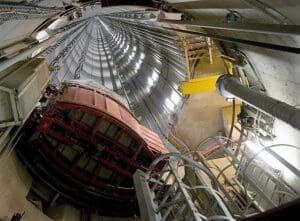
Excavation began on January 12, 1959, on the Italian side, and on June 1, 1959, on the French side. The drilling of the 11.6-kilometer-long, 7-meter-wide tube took three years, until August 14, 1962. On that day, French and Italian workers finally met and embraced after the final explosion freed the last rock separating the two countries.
An additional three years of work transformed the tunnel into an infrastructure that could be crossed day and night, in all seasons.
Dreamed of for centuries by visionaries and supported by bold governments who saw this ambitious project as a cornerstone of European development, the Tunnel was built by courageous men and women. They created far more than a link between two friendly valleys — they helped shape the history of Franco-Italian cooperation.
Sixty years after its opening to traffic, the same commitment continues to guide all those who work at the Mont Blanc Tunnel, fully aware of their responsibility to maintain the highest safety standards for the millions of drivers who use it.
Throughout its history, even the most tragic moments have been faced with a strong will to preserve memory.
The Franco-Italian teams of the TMB GEIE continue to ensure that the tunnel remains, every day, the reference for safety that it has become since its reopening in 2002.
A New Challenge: Ensuring Its Longevity for the Next Century
Since July 19, 1965, the Tunnel has welcomed over 57 million light vehicles — its primary users, accounting for 75% of the total traffic. Each year, over 8,000 families cross the tunnel on Saturdays during July and August.
If it is now easy to cross beneath Europe’s highest peak in just 12 minutes, it is thanks to the dedication of men and women who work tirelessly to ensure this route remains possible and safe.
ATMB and SITMB, honored to be the concessionaires of this structure, manage a tunnel carved into one of the most exceptional natural settings. Today, their challenge is to ensure that this passage is preserved for future generations.
This passing of the torch is being carried out through collaboration and by pioneering all new forms of decarbonized transportation that can be tested within the Mont Blanc Tunnel and on its access roads.
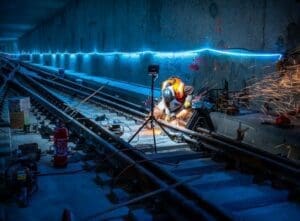
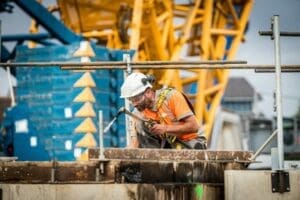
The Mont Blanc Tunnel is currently the first of the major European tunnels to undertake deep structural renovation work — including reconstruction of the vault and the roadway slab over more than 1.5 kilometers — with the goal of ensuring its durability for the next 100 years.
From September 1 to December 12, 2025, the Mont Blanc Tunnel will be closed for a new phase of renovation focused on a section of the vault. This autumn period was chosen due to its lower traffic volume compared to the rest of the year.
Throughout the summer, a video reconstruction based on INA archives allows you to relive the history of the tunnel’s construction from 1959 to 1965:
🔗 https://www.atmb.com/anniversaire-du-tunnel-du-mont-blanc/
You’ll also find historic construction photos and all the practical information you need to cross the highest mountain range in Europe — including traffic forecasts, travel events, weather, webcams, and more: History | Mont Blanc